How QR Codes Are Revolutionizing Small Business Marketing (And How to Use Them)
A few years ago, QR codes felt like a solution looking for a problem. Today, they are one of the most practical, low-cost tools a small business can deploy. If you run a local shop, a service business, or a growing e-commerce brand, QR codes give you a direct line between your physical presence and your digital marketing — no app required, no big budget needed.
Why QR Codes Matter More Than Ever for Small Businesses
QR codes matter for small businesses because they turn any printed surface into an interactive marketing channel at near-zero incremental cost. With over 6.8 billion smartphone users globally, the infrastructure to scan a code is already in every customer's pocket.
SMEs have always competed against larger brands on budget. What QR codes do is level that playing field in a specific, practical way: a $50 flyer run can now connect directly to a promotional landing page, a loyalty sign-up, or a review request — the same moves that big-box retailers pay thousands to orchestrate through dedicated apps.
Mobile usage has fundamentally changed how people interact with physical spaces. Customers expect to get more information instantly. A QR code on your packaging, window, or receipt satisfies that expectation without requiring a customer service rep to explain anything. That frictionless, contactless experience is no longer a novelty — it's an expectation.
The barrier to entry is genuinely low. A basic QR code can be generated in minutes. The more meaningful investment is in strategy: knowing where to place codes, what they should link to, and how to read the results. That's where small businesses often leave value on the table.
Static vs. Dynamic QR Codes: What Small Business Owners Need to Know
The main difference between static and dynamic QR codes is editability. Static codes are locked to a fixed URL the moment they're created, while dynamic codes let you change the destination at any time without reprinting the code itself.
For marketing purposes, dynamic QR codes are almost always the right choice. Here's why: imagine you print 500 menus with a static code linking to a seasonal promotion. The promotion ends. Now you have 500 menus pointing to a dead page. With a dynamic code, you update the destination URL in your dashboard — the printed code stays the same, the experience stays relevant.
Dynamic codes also unlock scan tracking and analytics. You can see how many times a code was scanned, when, from what device, and in some platforms, from which geographic region. Static codes give you none of that visibility.
The trade-off is cost. Most dynamic QR code features sit behind a paid SaaS plan. For businesses generating meaningful revenue from campaigns, that cost is easily justified. For a one-time use — say, a personal business card that links to a LinkedIn profile — a static code is fine. But if you're running any kind of ongoing mobile marketing campaign, dynamic is the default worth paying for.
High-Impact Use Cases for SME Marketing
The most effective QR code applications for small businesses connect an existing physical touchpoint to a digital action that moves customers further into your funnel.
Here are the use cases that consistently deliver results:
- Digital menus and product catalogs — Restaurants and retailers link codes to updated menus or catalogs, eliminating reprint costs and enabling real-time changes.
- Packaging inserts — A code on a product box can link to setup guides, recipe ideas, warranty registration, or a referral program. This extends the customer relationship beyond the sale.
- Business cards — A QR code on a card that opens a digital vCard or a landing page with a booking link converts a passive handout into an active lead capture tool.
- Storefront windows and signage — Codes on window displays let potential customers explore your offerings, hours, or promotions even when you're closed.
- Review collection — Printing a QR code near your checkout that links directly to your Google Business profile review page is one of the simplest ways to increase review volume without awkward verbal requests.
- Loyalty program sign-ups — A code at the register that opens a loyalty enrollment form removes friction from the sign-up process at exactly the right moment.
- Social media growth — Codes that link to Instagram, TikTok, or a newsletter sign-up page turn in-store foot traffic into a social following.
The pattern across all of these is the same: find a moment when a customer is already engaged, and give them a natural next step that benefits both of you.
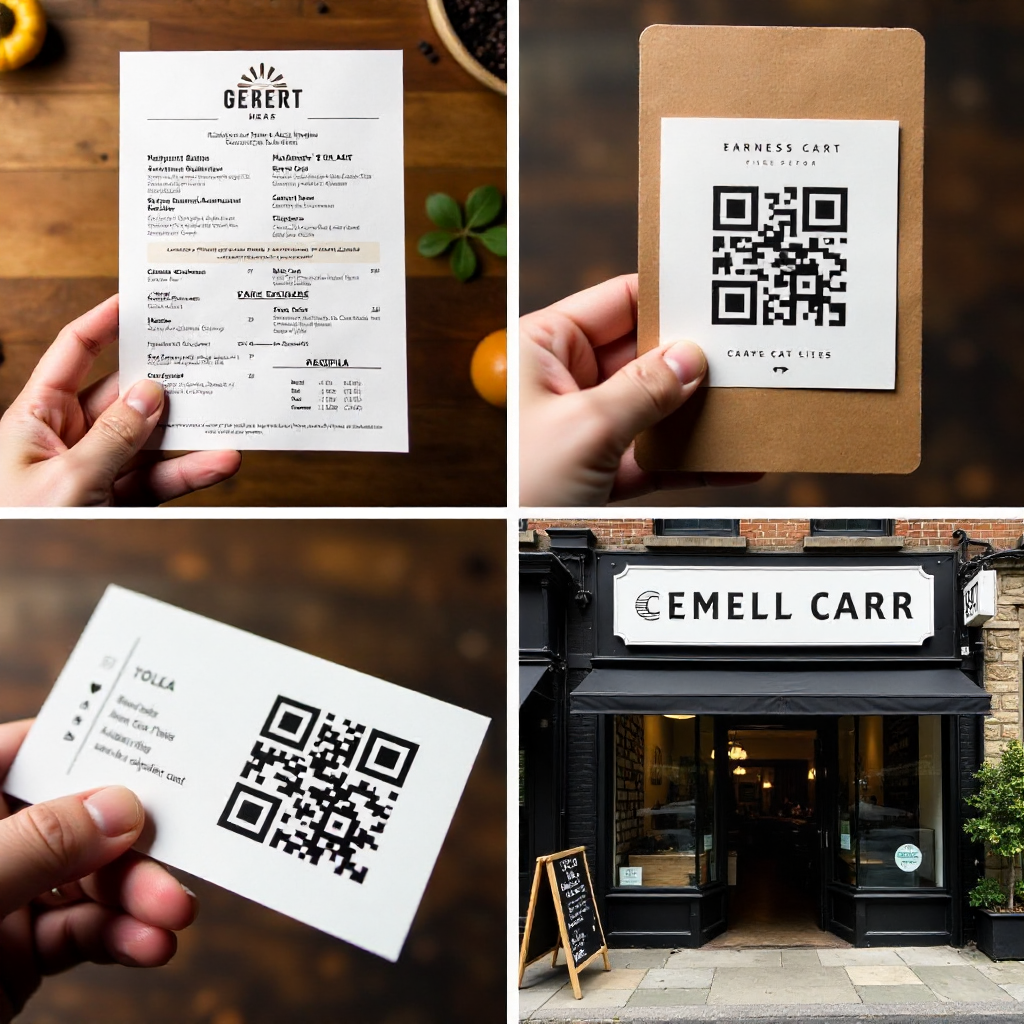
Turning Offline Touchpoints Into Digital Conversions
QR codes are a print-to-digital bridge — they convert passive physical materials into active entry points for your digital marketing ecosystem. This is the core strategic value for any small business with a physical presence.
Think about how much marketing real estate most small businesses already have: receipts, packaging, in-store signage, event flyers, local newspaper ads, branded merchandise. Without QR codes, all of that is one-directional. The customer sees it and either acts immediately or forgets. With a QR code, you attach a trackable, updatable digital action to every piece of print.
The destination matters as much as the code itself. Sending someone to your homepage is a missed opportunity. Effective campaigns send scans to a purpose-built landing page that matches the context of where the code appeared. A code on a coffee shop receipt might link to a "free pastry with your next visit" offer page. A code on a gym flyer links directly to a free trial sign-up form, not to the gym's general website.
This precision is what separates businesses getting real conversions from those just putting codes on things because it seems modern. The call to action near the code — even three words like "Scan for 10% off" — dramatically increases scan rates. Without it, many customers won't bother.
Tracking Performance: How QR Code Analytics Drive Smarter Decisions
QR code analytics give small businesses campaign performance data without needing a complex analytics stack. At minimum, a good dynamic code platform tracks total scans, unique scans, device type, and scan timing.
Here's how to put that data to work:
Time-based scan data tells you when your audience is engaging. If scans on your café's table tent peak between 11am and 1pm, that's your window to push a lunchtime offer. If a flyer campaign generates most scans on the first three days, you know your shelf life for printed materials in that context.
Device data confirms your mobile-first assumption — or challenges it. If a significant share of scans are coming from iOS versus Android, that can inform how you optimize the landing page experience for the dominant device type in your market.
Location data (available on some platforms) helps multi-location businesses or businesses running regional ad campaigns understand which physical placements are actually driving engagement. A code on a banner at a trade show versus a code on a flyer at a local market will produce very different scan patterns — and that comparison is useful intelligence.
The businesses that get the most from QR code marketing treat scan data the same way they treat foot traffic counts: as a signal to optimize, not just a vanity metric to report.
Getting Started: Choosing the Right QR Code Tool for Your Business
The right SaaS QR code generator for a small business is one that supports dynamic codes, provides clear scan analytics, and doesn't require technical expertise to operate. Those three criteria eliminate most free tools immediately.
When evaluating platforms, look for:
- Dynamic code support — Non-negotiable for any marketing use case where you'll want to update destination URLs or track performance.
- Branding options — The ability to add your logo and brand colors to a code increases scan rates and reinforces brand recognition. A plain black-and-white code works, but a branded one works better.
- Analytics dashboard — You want scan counts, unique visitors, device breakdown, and ideally time-series data. If the platform only shows total scans, that's a limited tool.
- Ease of use — If generating and editing a code takes more than five minutes, the tool will create friction that prevents consistent use across your team.
- Reasonable pricing for SME scale — Enterprise pricing models that charge by the thousand scans don't make sense for most small businesses. Look for flat monthly plans with predictable costs.
Most reputable platforms offer a free trial. Run a real campaign during the trial period — not a test — so you're evaluating actual workflow and data quality, not a demo environment.
Common Mistakes to Avoid When Using QR Codes in Marketing
Most QR code campaigns that underperform do so because of avoidable execution errors, not because QR codes don't work.
No Call to Action Near the Code
A QR code sitting alone on a flyer with no surrounding text explaining what it does will be ignored by the majority of people who see it. Always include a brief CTA — "Scan to claim your discount," "Scan to see the menu" — directly adjacent to the code. This single change typically increases scan rates significantly.
Linking to a Non-Mobile-Optimized Page
Every QR code scan happens on a smartphone. If the destination page is your desktop website that hasn't been tested on mobile, you're converting a good first impression into a frustrating dead end. Before any campaign goes live, scan the code yourself on both iOS and Android and check the full user experience on a phone screen.
Using Low-Contrast or Overly Decorative Designs
QR codes need sufficient contrast to scan reliably. Light gray codes on white backgrounds, or heavily stylized codes where the pattern is obscured by decorative elements, will fail to scan for a portion of users — especially in low-light environments. Test your code design with multiple scanning apps before printing at volume.
Relying on Static Codes for Ongoing Campaigns
This is the most expensive mistake in the long run. Printing thousands of static codes that can't be updated locks you into a single destination URL indefinitely. If that page changes, gets deleted, or the campaign evolves, you have no recourse. Dynamic codes cost a bit more monthly but eliminate this risk entirely.
Frequently Asked Questions
Are QR codes free to use for small businesses?
Basic static QR codes are free to generate through many online tools. Dynamic QR codes — which allow URL editing and include scan analytics — typically require a paid subscription, usually starting at $5–$20 per month depending on the platform. For marketing use, the dynamic option is worth the cost.
Can I change where a QR code links without reprinting it?
Yes, but only with dynamic QR codes. When you create a dynamic code, it routes through the platform's redirect URL. You change the destination in your dashboard, and the printed code automatically sends scanners to the new page. Static codes cannot be changed after creation.
How do I know if my QR code campaign is working?
Track scan volume, unique scans, and downstream conversions (form submissions, purchases, sign-ups) on the landing page the code links to. Most dynamic QR code platforms provide built-in scan analytics. Connect the landing page to Google Analytics to measure what happens after the scan.
Do customers actually scan QR codes?
Yes, adoption has grown substantially since smartphone cameras began natively reading QR codes without a separate app. According to research on QR code usage, tens of millions of codes are scanned daily worldwide. Context and CTA placement are the key variables — a well-placed code with a clear reason to scan will get scanned.
What size should a QR code be on printed materials?
The minimum recommended size is 2 cm × 2 cm (roughly 0.8 inches square) for materials scanned at arm's length, like business cards or packaging. For larger formats like posters or signage viewed from greater distances, scale up proportionally — a code on a window display should be at least 10–15 cm to scan reliably from 1–2 meters away.
QR codes won't solve every marketing challenge a small business faces, but for closing the gap between physical presence and digital engagement, few tools are as accessible, affordable, and immediately deployable. The businesses seeing the best results aren't doing anything exotic — they're placing the right code, in the right context, with a clear reason for customers to scan.